12 Best Employee Recognition Platforms in 2026
Recognition
Updated on
October 6, 2026
by
Garrett Genest

X min
Recognition
Updated on
October 6, 2026
by
Garrett Genest
X min
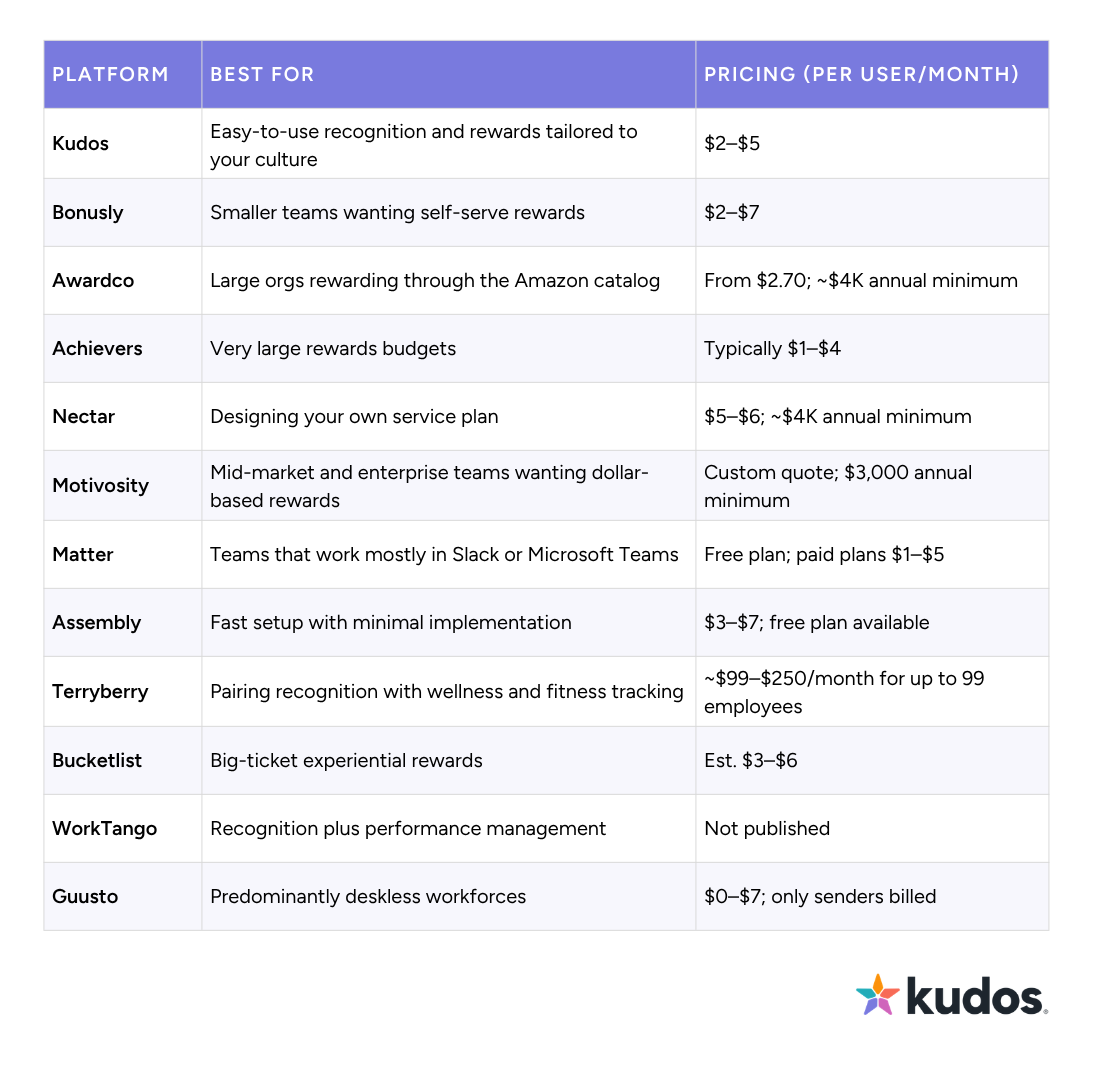
The best employee recognition platforms in 2026 are Kudos, Bonusly, Awardco, Achievers, Nectar, Motivosity, Matter, Assembly, Terryberry, Bucketlist, WorkTango, and Guusto. The right one for you depends on your workforce (desk-based, frontline, or both), your rewards budget, and whether you need recognition alone or recognition, rewards, and culture tools in one platform.
Employee recognition software is a digital platform that helps organizations celebrate, acknowledge, and reward employees for their contributions, achievements, and behaviors. It makes it easy for peers, managers, and leaders to recognize each other in real time. It also gives HR and leadership visibility into how recognition is flowing across the organization.
👉 Want to go deeper on the must-haves? See Top Features to Look for in Employee Recognition Software.
We compared each platform on five criteria:
We drew on each vendor's published information, customer feedback from public review sources, and our own experience in the category.

Used by: Vanderbilt University, MU Health Care, Make-A-Wish Foundation, and organizations in over 140 countries.
Pricing: $2–$5/user/month, with discounts based on number of users and contract length. Rewards are optional, and Kudos never marks up points or rewards.
Best for: Organizations that want a recognition and rewards platform that's easy for everyone to use and tailored to their unique workplace culture.
Description: Kudos was the first platform to bring social employee recognition software to market. Today it covers the full recognition loop in one platform:
What sets it apart: Managers get their own view of team recognition, weekly celebration reminders, and an engagement report that flags low-activity team members. That matters because good intentions don't equal habits. Among Kudos clients, 72% encourage managers to recognize their teams, but only 37% formally train them. Tools that make recognition part of a manager's week close that gap.
What customers report: In Kudos' 2026 Customer Impact Study, conducted by Leger Research:
👉 Want to see Kudos without the sales pitch? Watch our latest product demo.

Image source: Bonusly
Used by: Chobani, Unilever, ZipRecruiter
Pricing: $2–$7/user/month.
Best for: Smaller organizations or teams that want a self-serve rewards program.
Description: Bonusly focuses on peer-to-peer recognition and integrates with common workplace tools like Slack and Microsoft Teams. It includes automated milestone recognition and a global rewards catalog. Bonusly’s highest plan tier includes some simple features for managing and tracking one-on-ones.

Image source: Awardco
Used by: AT&T, Texas Roadhouse, Dow Jones
Pricing: Starts at $2.70/user/month. Annual minimums from ~$4,000.
Best for: Large organizations that want to offer rewards via the Amazon Marketplace.
Description: Awardco combines peer and manager recognition with milestone awards and external recognition. It connects to Amazon’s catalog for reward fulfillment and includes analytics and offline recognition features. Designed to accommodate large and international teams.
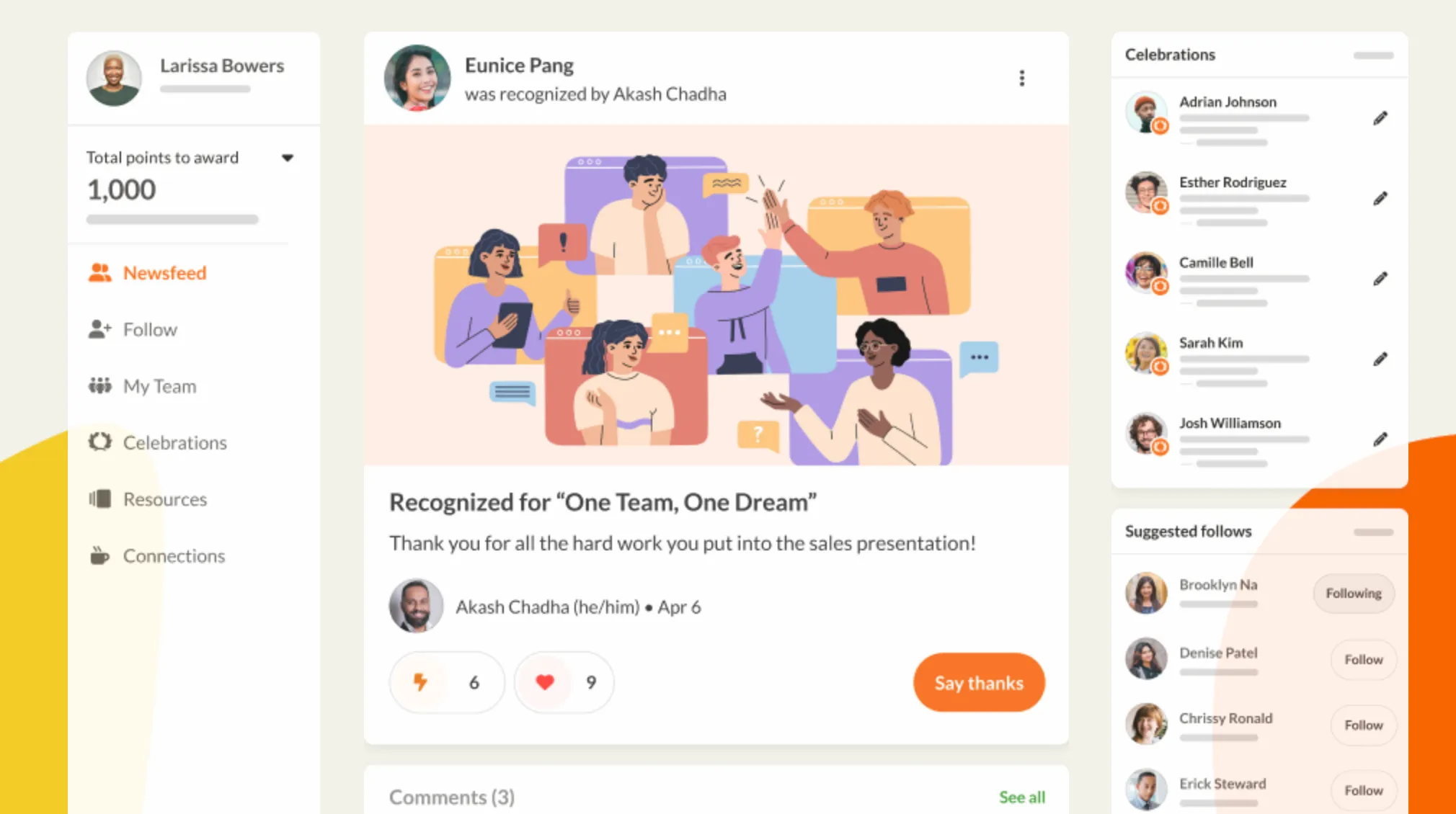
Image source: Achievers
Used by: Kellogg's, Scotiabank, TELUS
Pricing: Typically $1–$4/user/month.
Strengths: Best for organizations with very large rewards budgets.
Description: Achievers offers peer and social recognition, monetary and non-monetary rewards, and analytics. It integrates with HCM platforms like Workday and includes a mobile app. Programs can be customized to align with organizational culture.
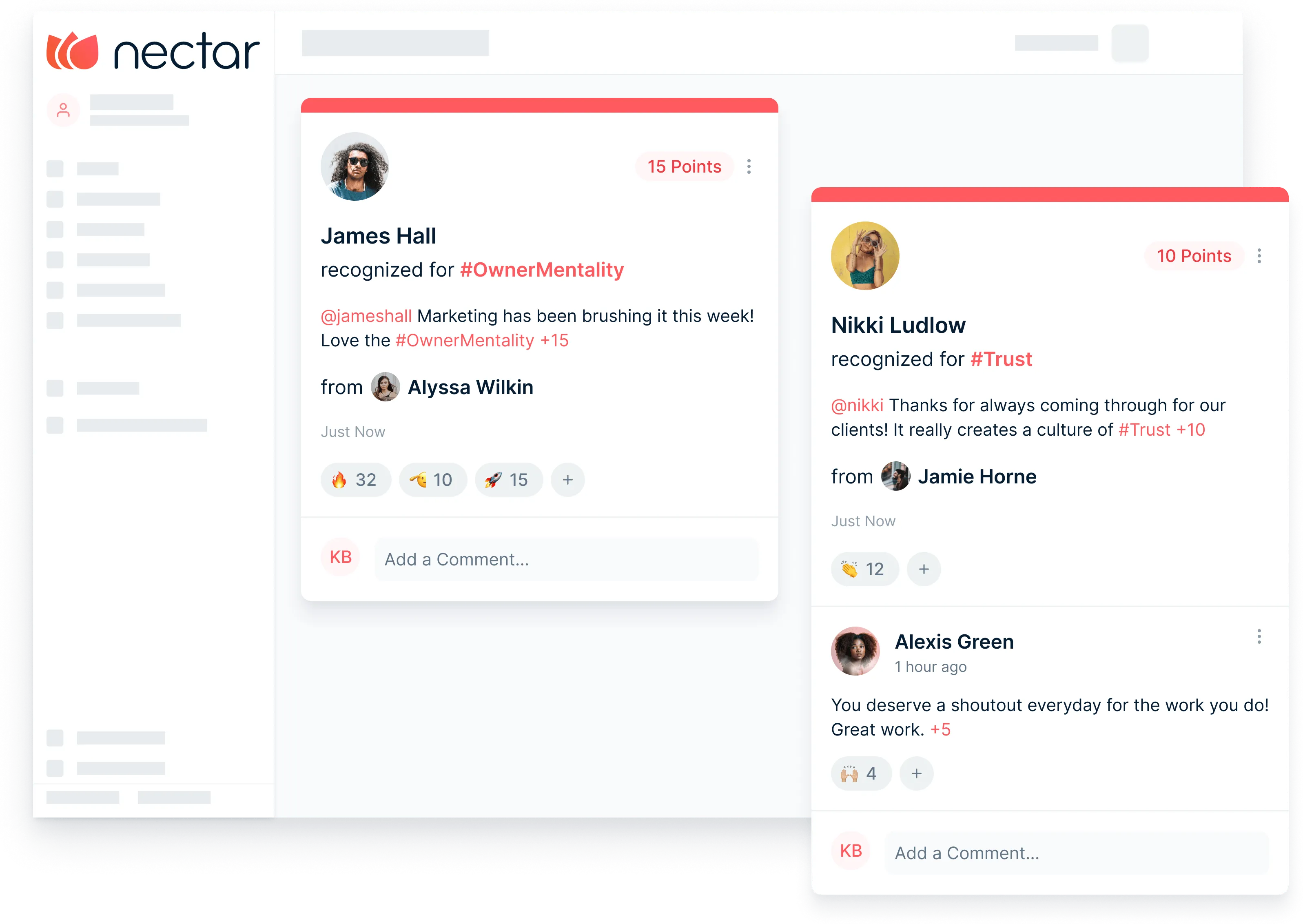
Image source: Nectar
Used by: Statista, Calendly, Heineken
Pricing: $5–$6/user/month. Annual minimum of ~$4,000.
Strengths: Best for organizations that want to design their own product service plan.
Description: Nectar provides peer recognition, automated milestone tracking, and a customizable reward catalog. It includes features for wellness and training challenges and integrates with collaboration tools such as Slack and Teams.
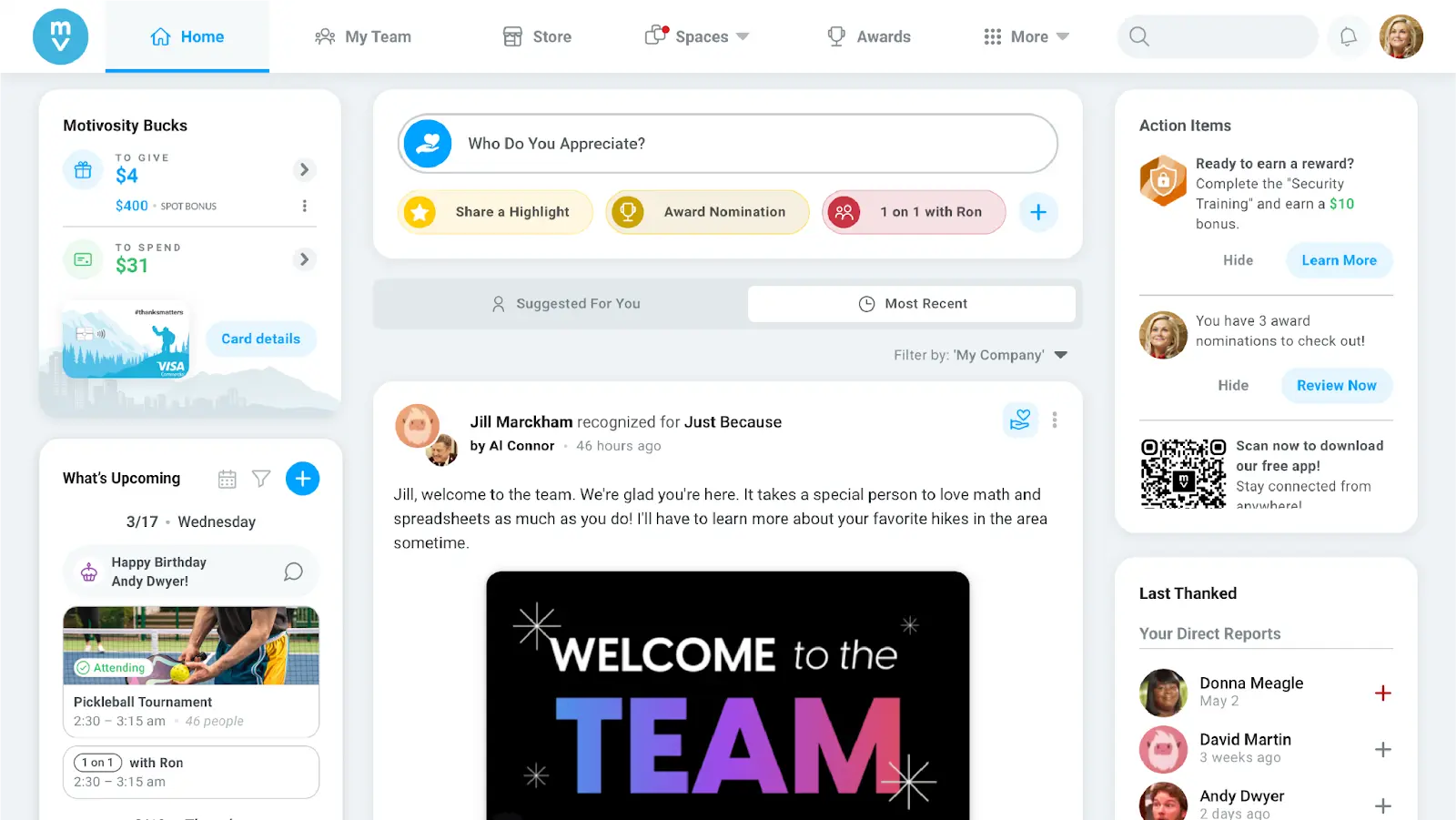
Image source: Motivosity
Used by: Old National Bank, Puma, Ricola
Pricing: Fully custom and quote-based, with a minimum spend of $3,000 per year.
Best for: Mid-market and enterprise organizations that want dollar-denominated recognition and a spendable rewards card.
Description: Motivosity is built around a social feed where employees share peer-to-peer appreciation tied to company values. Recognition is given in Motivosity Bucks, where one buck equals one dollar, and employees can spend what they earn with the ThanksMatters Visa card. The platform also covers milestones and service anniversaries, and managers can award spot bonuses.
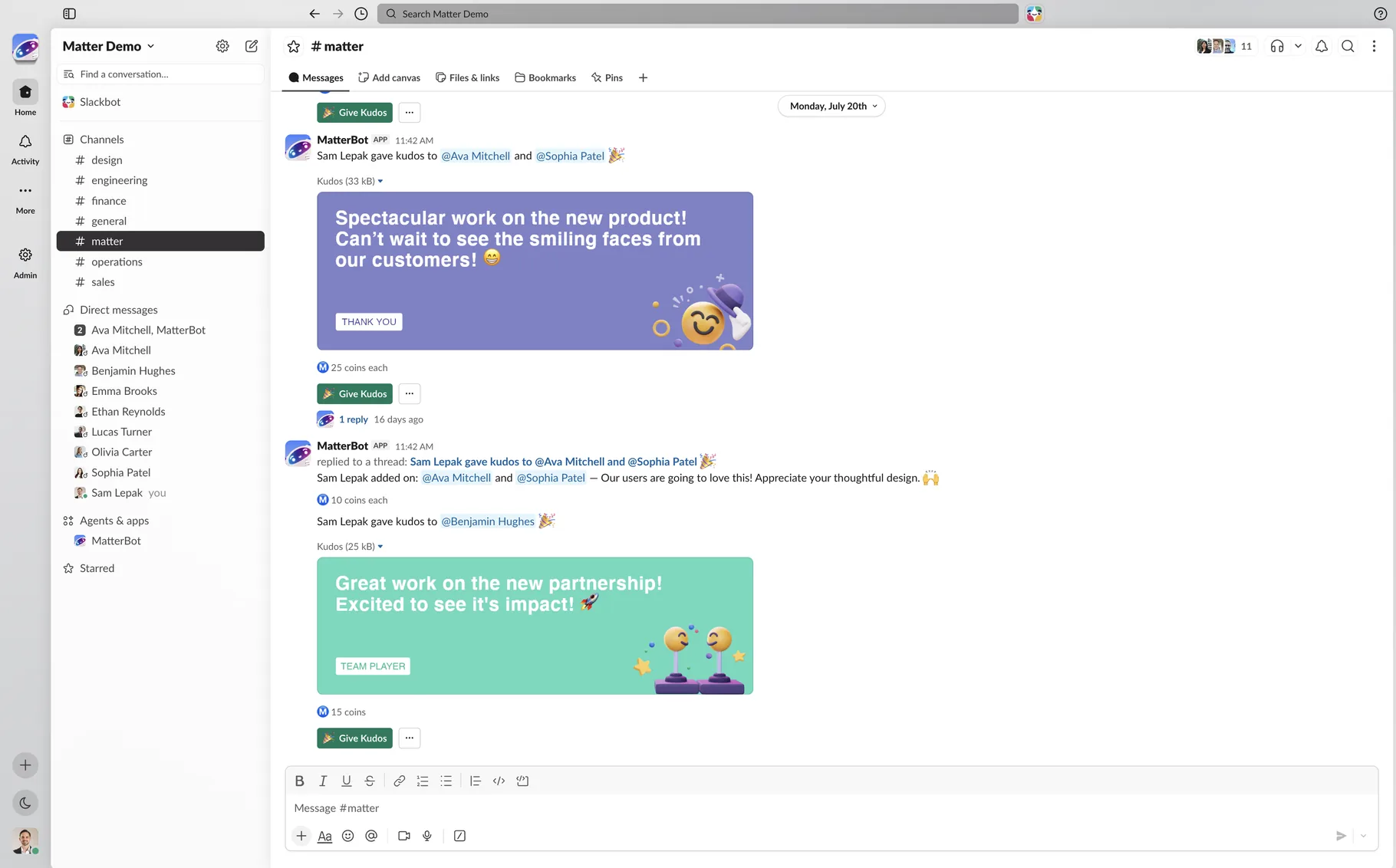
Image source: Matter
Used by: Sephora, True Classic, McInnis & Holloway
Pricing: Free plan for unlimited users; paid tiers run $1–$5 per user per month, billed annually, with custom enterprise pricing.
Best for: Teams that work mostly in Slack or Microsoft Teams and want simple recognition with published pricing.
Description: Matter runs inside Slack and Teams, so there's no separate app or login. Employees send recognition as designed cards tied to company values. Matter also includes an automated weekly recognition prompt called Feedback Friday. Paid tiers add automated celebrations, analytics, a rewards catalog with gift cards, swag, and donations, challenges, and optional pulse and eNPS surveys.

Image source: Assembly
Used by: USC, StubHub, Allbirds
Pricing: $3–$7/user/month depending on plan. Free version available.
Best for: Organizations that want to get going fast with little or no implementation support required.
Description: Assembly offers recognition, surveys, and engagement tools with configurable rewards. It integrates with messaging and HR tools and includes a free plan for smaller teams. Features include milestone automation and lightweight reporting.

Image source: Terryberry
Used by: Tidelands Health, Village Hotels, Freedom Financial Network
Pricing: Starts at ~$99–$250/month for up to 99 employees.
Best for: Organizations that want to incorporate fitness tracking into their recognition programs.
Description: Terryberry provides peer recognition, point-based rewards, service anniversaries, and wellness programs. It includes analytics and integrates with several HR tools. Programs are modular and can be adapted to different use cases.
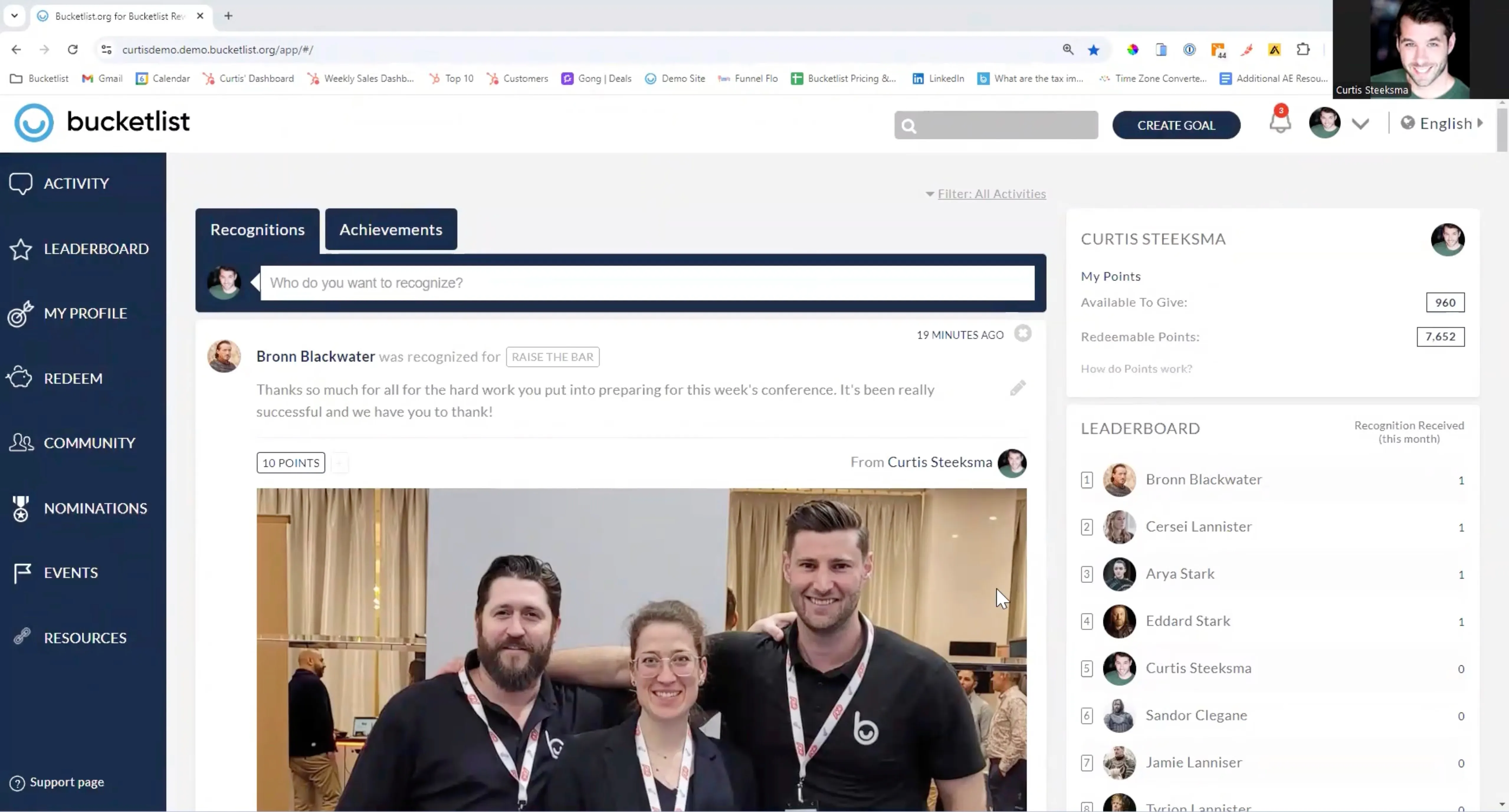
Image source: Bucketlist Rewards
Used by: RBC, Chick-fil-A, Danone
Pricing: Estimated $3–$6/user/month.
Best for: Organizations that want to emphasize big-ticket experiential rewards.
Description: Bucketlist enables peer and manager recognition with configurable rewards including gift cards and experiences. It offers social-style feeds, automation of milestones, and reporting tools. Integrations with communication and HR systems are supported.

Image source: WorkTango
Used by: Alarm.com, Boston Beer Company, BraunAbility
Pricing: Not publicly specified. Per-user pricing with annual contracts.
Best for: Organizations that don’t currently have a performance management system in place.
Description: WorkTango includes recognition, rewards, performance management, and survey tools in one platform. It supports various recognition formats and includes analytics for tracking engagement. Integrates with major HR and communication platforms.
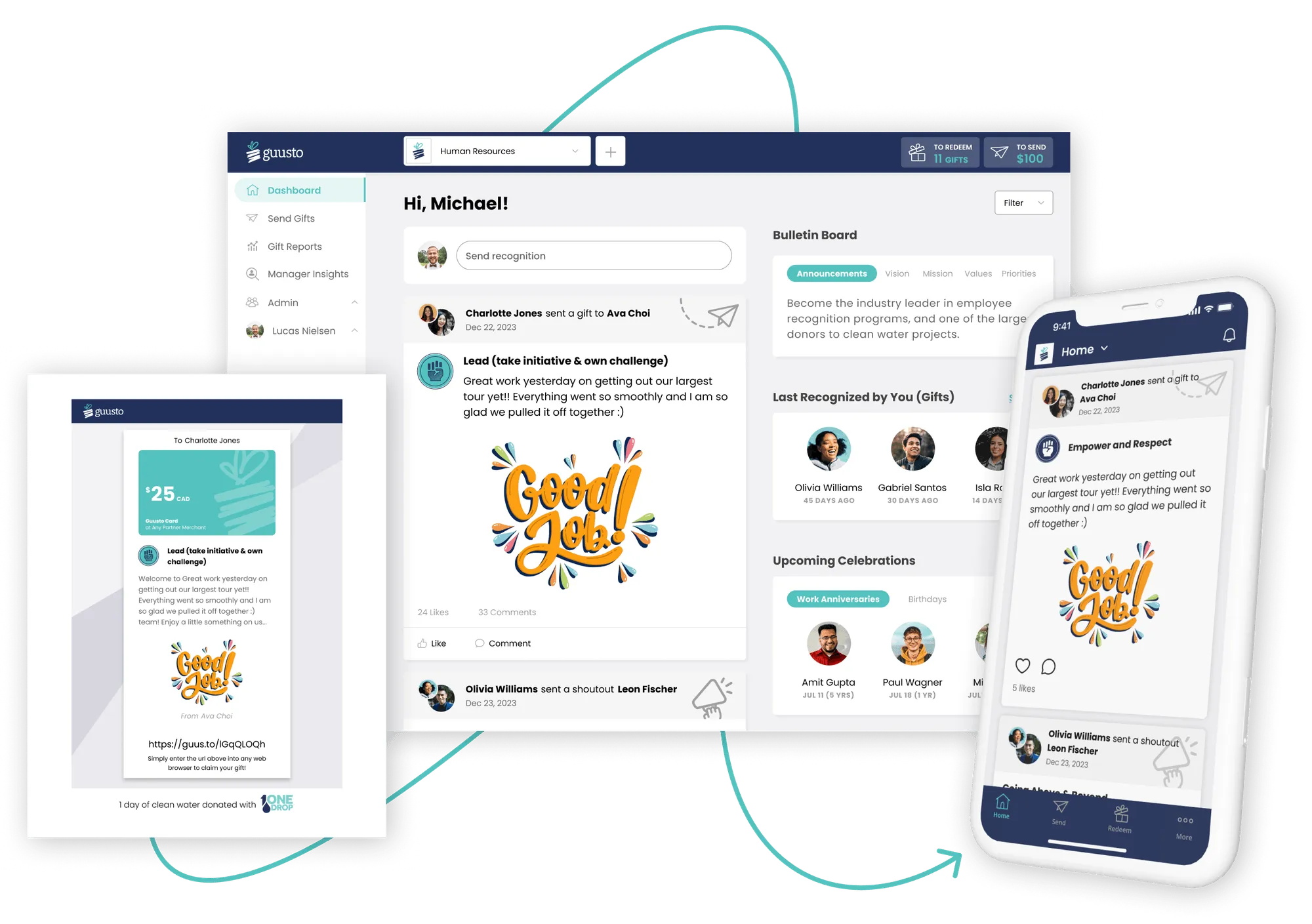
Image source: Guusto
Used by: Canada Life, Toronto Raptors, Marriott Hotels
Pricing: $0–$7/user/month. Only senders are billed.
Best for: Organizations that are made up predominantly of deskless workers.
Description: Guusto allows digital and printable recognition for both online and offline employees. Rewards are broad and unclaimed gifts are fully refunded. Features include team budgets, automated milestones, and Slack/MS Teams integrations.
Choose the platform your whole workforce will use every week, not the one with the longest feature list.
Here's a useful reality check. In Kudos' 2026 study, only 5% of decision-makers said Kudos replaced another formal recognition platform. For most organizations, the real alternative isn't a competitor. It's a spreadsheet, a handful of Slack shout-outs, and recognition that depends entirely on which manager you happen to have.
Before you sign, ask each vendor these five questions:
👉 For help building the business case, see The Value and the ROI of Employee Recognition.
Recognition is one of the most direct levers you have on retention and engagement, and most organizations still underuse it.
Senior leaders became 50% more likely to strongly agree on the value of recognition between 2022 and 2024, yet the share of employees who feel adequately recognized stayed flat at 22%. Leaders believe in recognition. Employees aren't feeling it yet.
Recognition that meets even one of Gallup's five pillars makes employees 2.9 times as likely to be engaged as recognition that meets none. You don't need a perfect program to start seeing results.
Gallup estimates that replacing a leader or manager costs around 200% of their salary, a technical employee about 80%, and a frontline worker about 40%. Recognition that keeps even a few people from leaving pays for itself quickly.
👉 Curious why recognition works the way it does? Read The Science Behind Employee Recognition.
The best employee recognition platform is the one your whole workforce will actually use. Kudos is best for organizations that want easy-to-use recognition and rewards tailored to their culture. Guusto suits deskless workforces, Awardco suits large enterprises that want Amazon-based rewards, and Assembly suits teams that need a fast, lightweight setup.
Most employee recognition platforms cost between $1 and $7 per user per month, and some offer free tiers. Rewards budgets are separate from platform fees. Ask every vendor about annual minimums and rewards markups. Kudos costs $2–$5 per user per month and never marks up points or rewards.
Recognition software helps people say "what you did mattered, and I noticed." Rewards software turns that moment into something tangible, like points redeemed for gift cards or experiences. Many platforms, including Kudos, combine both, and rewards are optional in Kudos.
Yes, if the platform offers mobile access and flexible delivery. Look for mobile apps, kiosk or printable options, and integrations with the tools frontline teams already use.
Most leading platforms integrate with Slack and Microsoft Teams. With Kudos, employees can send recognition messages directly from Slack or Teams, and user provisioning connects with most major HRIS platforms.
Start by recording baseline engagement, turnover, and productivity before launch. Then track those metrics along with participation rates after launch. The basic formula is: ROI = (financial benefits − program costs) ÷ program costs. See our ROI guide for a step-by-step walkthrough.


Employee recognition differs by industry. Knowing how to use it strategically can have an undeniable impact on your business’ success.
Get Your Guide